


April 10, 2026
NEWS & TOPICS
Developing Advanced Tours at Atosa-nupuri, a “Local Treasure” – Teshikaga-Style Ecotourism Promotes Two Kinds of “Eco”
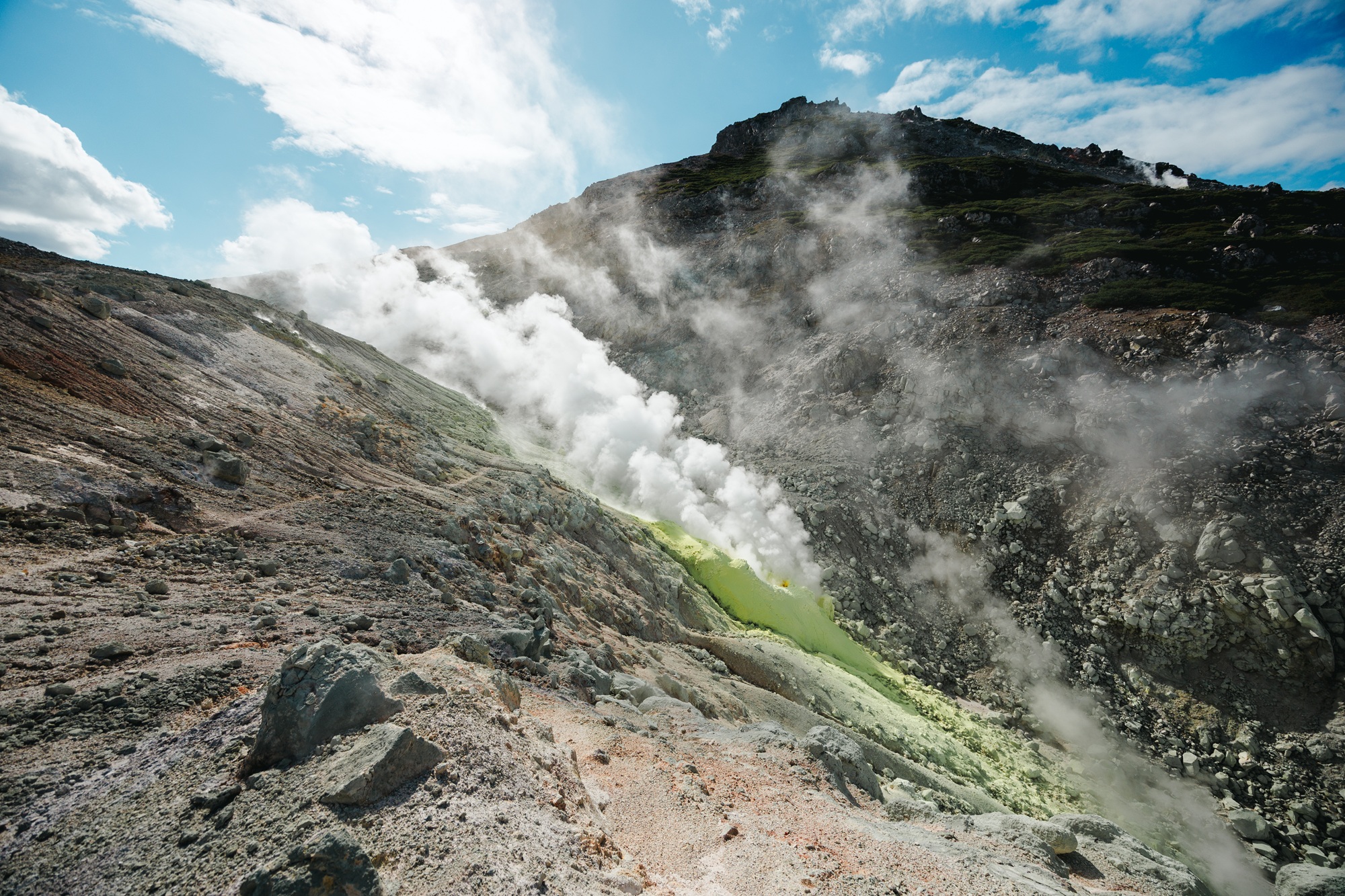
The fumarole known as "F1" is believed to be the largest in Atosa-nupuri. Its overwhelming power can only be experienced by those who join a guided tour.
In the eastern Hokkaido town of Teshikaga, a new style of ecotourism is taking shape—one that goes beyond simple nature sightseeing. At the heart of these efforts are guided tours of Atosa-nupuri(Mount Io), a volcanic landscape rich in both natural wonder and cultural history. How are local people working to protect this “regional treasure” and pass it on to future generations, while also sustaining their community? By joining one of these ecotours, visitors can discover the ideas and initiatives that drive Teshikaga’s unique approach to ecotourism.
History of a Town Woven Together with Nature
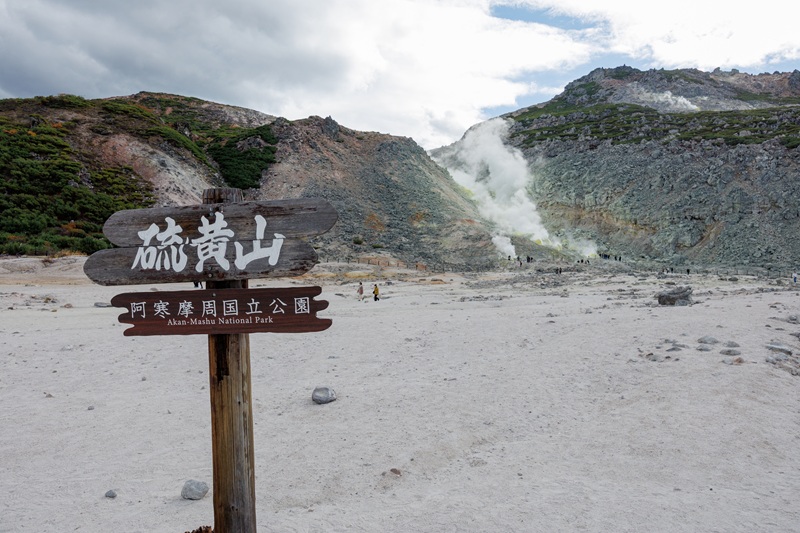
Walk just a short distance over the gravel from the parking lot, and you can see the steaming fumaroles up close—even without joining a guided tour.
Billowing white steam and streaked with sulfur-yellow and lava-brown rock, the rugged mountain dominates the landscape. Rising within Akan-Mashu National Park, Atosa-nupuri (508 meters high) was formed roughly 7,000 years ago—and still commands attention today as a one-of-a-kind “living volcano” in the area.
In the indigenous Ainu language, “Atosa-nupuri” means “naked mountain.” The name reflects its stark slopes: because of the high sulfur content in the soil, almost no plants can grow on the mountainside, leaving the rock dramatically exposed. This sulfur has long been a valuable resource. Used in gunpowder, agricultural chemicals and other products, it was actively mined at Atosa-nupuri from the late 1800s through the mid-1900s.
Sulfur mining developed into a major local industry, and the construction of Hokkaido’s second railway line—built to transport the mineral—helped spur the growth and modernization of eastern Hokkaido as a whole. The volcano also gave rise to another source of prosperity: hot springs. Strongly acidic waters welling up from Atosa-nupuri fed the development of Kawayu Onsen at its base, turning the area into a popular hot-spring resort.
The town around Atosa-nupuri is further enriched by remarkable natural features, including Lake Mashu—renowned for having some of the clearest water in the world—and Lake Kussharo, Japan’s largest caldera lake. Among these natural wonders, Atosa-nupuri stands out as a true symbol of the region, a mountain that has shaped its history and nurtured its unique culture.
“Teshikaga is so rich in nature that it could be described as ‘blessed to an excessive degree,'” says Jin Fujiwara, a resident in the town who has worked as a guide for 26 years. “Atosa-nupuri not only offers magnificent natural scenery but also has a profound history. I believe there are very few mountains like it,” he continues. “Rather than simply using the natural environment of Atosa-nupuri, we want to enjoy this regional treasure while carefully protecting the mountain so that we can pass it on to the next generation.”
As Fujiwara describes, Teshikaga has developed a distinctive style of ecotourism through communitywide efforts, drawing on its abundant natural resources to promote both regional revitalization and environmental conservation.
In 2008, local residents launched the Teshikaga EcoMachi Promotion Conference. The organization’s comprehensive ecotourism promotion plan received national certification in 2016—the first case of its kind in Hokkaido. Today, the conference’s ecotourism promotion subcommittee, chaired by Fujiwara, is responsible for putting this plan into action.
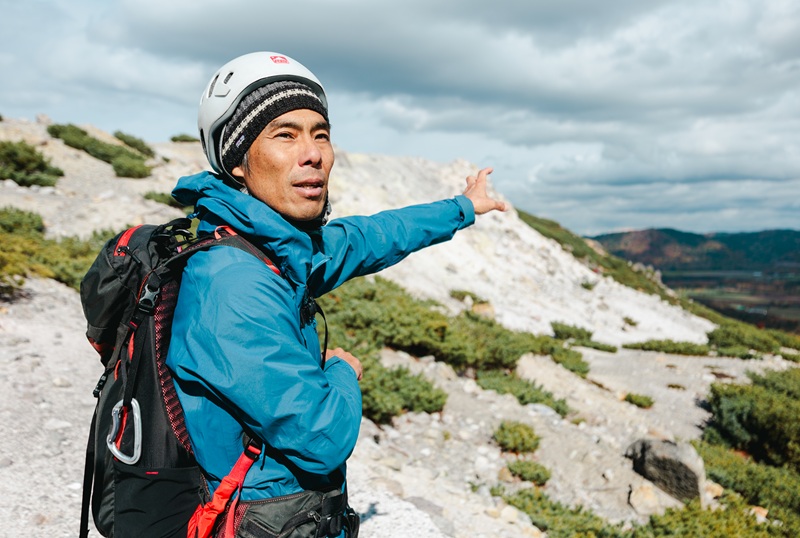
Jin Fujiwara leads a trekking tour on Atosa-nupuri.
Developing Tours Centered on Sustainability
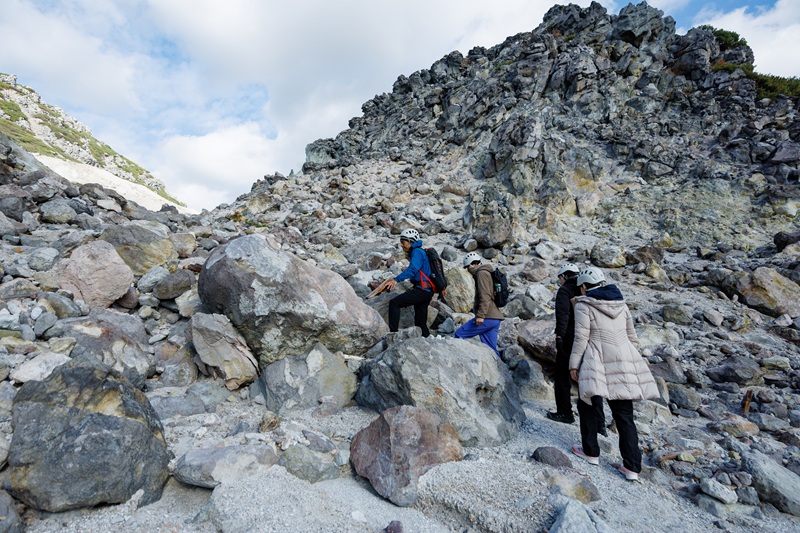
As the smell of sulfur hangs in the air, trekking tour participants carefully climb over the rocky terrain, watching each step.
Among the diverse outdoor activities available in the area, the Atosa-nupuri Trekking Tour, launched in 2020, stands out as a centerpiece. Atosa-nupuri had been closed to climbers for many years following a tragic rockfall accident in 2000 in which two mountaineers lost their lives. Yet, because the mountain is both a symbol of the region and a key tourism asset, the possibility of reopening it—under strict conditions to ensure safety and protect the natural environment—remained a long-standing topic of discussion.
“In the past, children on school trips came here, and the mountain has deep emotional significance not only for climbers but also for local residents,” Fujiwara explains. “Many local people expressed their wish to see the mountain reopened for climbing, saying, ‘It’s a truly wonderful mountain.'” He adds: “Driven by these hopes, people from both the public and private sectors—including local guides—came together. They held discussions, walked the site repeatedly and carefully designed trekking routes and a tour structure.”
The framework developed over roughly three years was designed with sustainability at its core. The fumaroles scattered across Atosa-nupuri were first designated as “specified natural tourism resources” under the Ecotourism Promotion Act, and the entire mountain area was placed under restricted access. Building on this foundation, a new system was introduced that restricts entry to certified guides only. To qualify, guides must hold the official Hokkaido Outdoor Guide license, undergo specialized training on the unique natural features of Atosa-nupuri, and receive accreditation from the promotion conference. This initiative represents only the second such designation of natural resources in Japan, and the first in the country to implement this level of access control.
Hikers can enter the mountain only by joining trekking tours led by these certified guides, available through the Lake Mashu Tourism Association. A portion of the tour fees is earmarked for nature conservation, including trail maintenance and periodic environmental monitoring.
Beyond its sustainability focus, the tour framework and the integrated public–private collaboration behind it have earned high praise. In 2023, the initiative received the Ecotourism Award from the Japan Ecotourism Society and was selected as one of the “Top 100 Sustainable Destinations” worldwide by an international certification body.
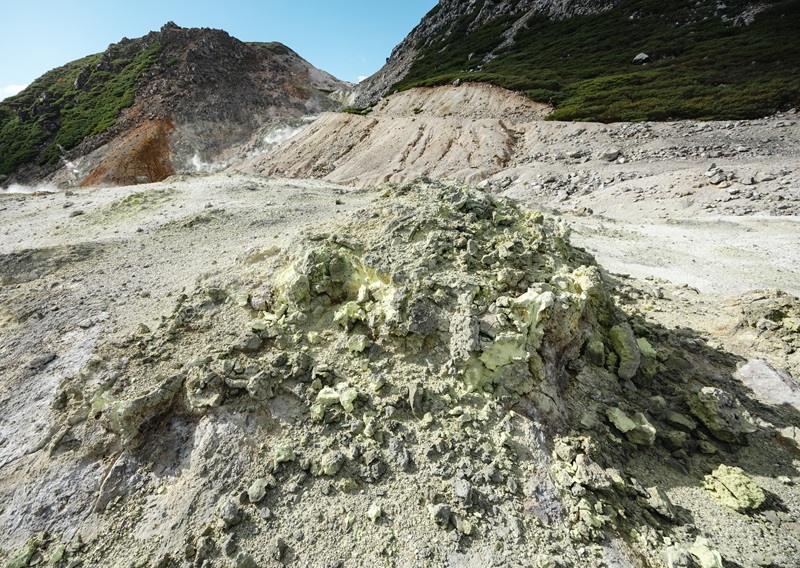
A fumarole on Atosa-nupuri, designated as a “specified natural tourism resource” in Teshikaga.
A Series of “Wow!” Moments on a Route Rich in Nature and History
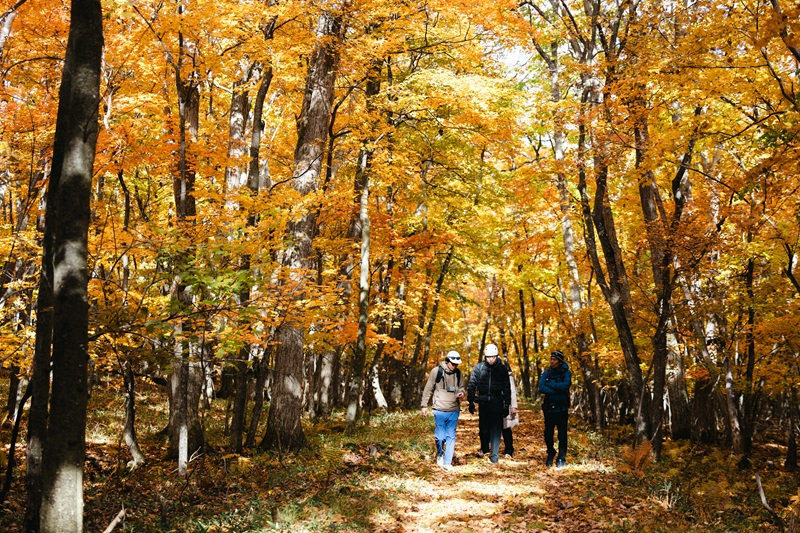
Tour participants walk through a tunnel of golden autumn leaves, listening as their guide explains the unique vegetation of Atosa-nupuri and the area’s history of sulfur mining.
The tours are carefully designed not only in terms of overall structure, but also in the details of their routes. Each itinerary reflects thoughtful planning that seeks to balance enjoyment of the landscape with its long-term conservation.
In late October 2025, with the autumn foliage at its peak, a guided tour led by Fujiwara set out along a modest loop—just 4.5 kilometers and about three hours on foot—yet the many different faces Atosa-nupuri revealed along the way were astonishing.
From the trailhead, the path follows the remnants of an old mining railway, a quiet reminder of the region’s industrial past. At the foot of the otherwise desolate mountain slopes, a surprising richness of life appears: wild grasses, shrubs and trees thrive here. In autumn, the broadleaf trees erupt in brilliant color, painting the landscape in deep reds, golds and amber. In early summer, the fresh green foliage and clusters of white blossoms from the alpine plant isotsutsuji (wild rosemary) create a delicate beauty, according to the guide. Scattered along the way are abandoned sulfur-mining structures that lend the route a tangible sense of history.
After you leave the forest belt, helmets are required to enter the restricted-access zone. From here, the trail crosses bare, rocky slopes where white steam billows from the earth. You can stand remarkably close to the dramatic explosion crater and fumaroles, feeling the raw energy of the volcano beneath your feet. For safety reasons, the route does not continue all the way to the summit, but several viewpoints along the way offer sweeping vistas of the surrounding wilderness and the distant townscape. In the latter part of the hike, the trail opens onto views of Lake Kussharo, Japan’s largest caldera lake, before leading you back down through the forest.
“In designing these routes, we deliberately connected the most striking natural and historical spots so that we, as guides, would genuinely enjoy them ourselves. Without that, our guests would never feel that ‘Wow!’ moment of surprise,” Fujiwara explains. “Because this entire area is national forest and a special protection zone designated by the Ministry of the Environment, we do everything we can to minimize our impact on nature, using former mining tracks and existing animal trails as our mountain paths.”
Held annually from mid-May to early November, the tour draws not only seasoned hikers from across Japan but also visitors from overseas, including Australia and Singapore. “Atosa-nupuri is still becoming known,” Fujiwara says with quiet confidence, “but those who have hiked here are highly satisfied with the experience.”
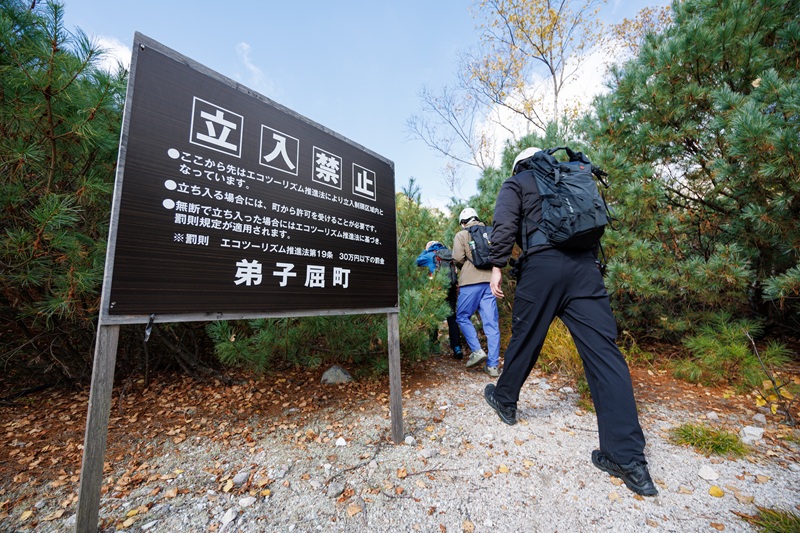
To ensure both climber safety and the conservation of Atosa-nupuri’s fragile ecosystem, entry is allowed only on tours led by certified guides.
Two Types of “Eco” Achieved through Public-Private Collaboration
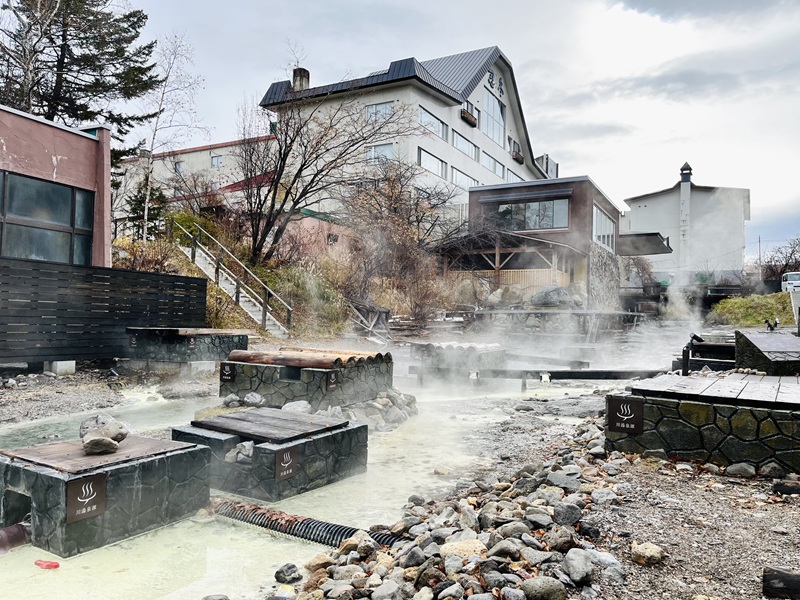
The “Ganban Terrace,” built with scrap materials from demolished facilities. Visitors can soak in hot springs while strolling around the area. Photo: courtesy of Lake Mashu Tourism Association
Also, at the foot of Atosa-nupuri, efforts are underway not only to protect the natural environment, but also to promote ecotourism that allows visitors to experience this landscape more deeply.
In 2016, full-scale efforts began to revitalize the Kawayu Onsen hot spring resort, where visitor numbers had been declining. The turning point came when Akan-Mashu National Park was selected as a pioneering model for the Ministry of the Environment’s Project to Fully Enjoy National Parks, an initiative aimed at attracting more overseas visitors. The town government, the ministry, and Hoshino Resorts Inc., which operates local accommodation facilities, joined forces to launch a large-scale redevelopment plan for the entire hot spring district.
From an ecotourism perspective, one initiative deserves special mention: the restoration of the onsen river that flows through the center of the hot spring town. The river’s unique environment, created by highly acidic spring water, had long caused thick sludge to accumulate. Over time, garbage such as pipes and tiles had also been dumped into the river, further degrading its condition.
To address the problem, local residents organized the “Akan-Mashu National Park Kawayu Area Management Association.” Working together with town officials and Ministry of the Environment staff, they undertook an extensive cleanup of the Onsen River. Their efforts continued until the natural bedrock layer of the river bottom—stretching from Atosa-nupuri—was once again clearly visible.
Along the riverbank, a wooden boardwalk has been built with recycled materials salvaged from closed hotels. Branded as the “Kawayu Ganban Terrace,” it has quickly become a new highlight for visitors. In Japanese, “ganban” means bedrock, referring to the exposed natural rock of the riverbed. The project was spearheaded by Kazuo Akiyama of the Lake Mashu Tourism Association, who stresses that its success rests on a shared sense of purpose between local people and public bodies. “The real driving force,” Akiyama explains, “is the passion of local residents who love their hometown and act with a ‘we have to do something’ mindset. It’s not just the local authorities. That enthusiasm is what’s fostering strong collaboration, even with the Ministry of the Environment.”
Lake Mashu, famed for having the clearest water in Japan, is the focus of annual water quality monitoring surveys. Because its unique topography and environment are believed to have kept manmade pollution to an absolute minimum, the lake serves as an important international reference site for water quality observation. When the National Institute for Environmental Studies ended its long-running survey program in fiscal 2017, a new body stepped in: the “Lake Mashu Environmental Conservation Liaison Council,” formed by five neighboring towns and related organizations, took over responsibility for the studies.
To fund this work, the council turns to crowdfunding and other support. Lake Mashu lies within a strictly protected zone of a national park and is normally closed to the public. However, as a special reward, the two highest crowdfunding donors each year are invited, along with their guests, to accompany researchers during the survey, granting them rare, firsthand access to one of Japan’s most pristine natural environments.
The town government plans to further expand its tours and related programs, with the aim of attracting more visitors. Yet the guiding principle of “protecting nature above all” remains firmly at the core, Akiyama explains.
“People come to our town seeking nature. Without it, tourism simply wouldn’t be sustainable. By carefully balancing the two ‘ecos’—ecology and economy—we hope to keep promoting tourism and community development that make the most of our town’s unique natural environment, culture and history,” he says.
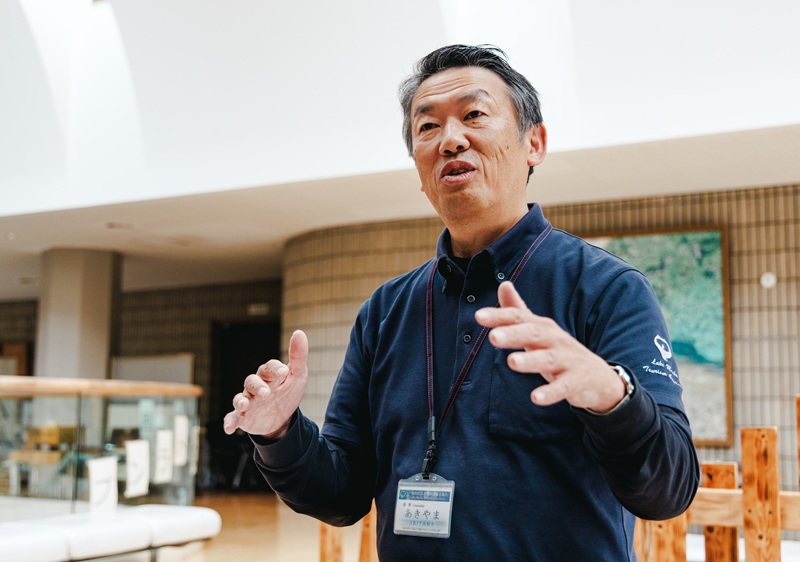
Kazuo Akiyama discusses the town’s ecotourism initiatives.
Today, municipal and tourism officials from across Japan who are interested in Teshikaga’s ecotourism, centered on Atosa-nupuri, are visiting one after another to see it for themselves. How will this “Teshikaga-style ecotourism” evolve from here? It is a development well worth following.
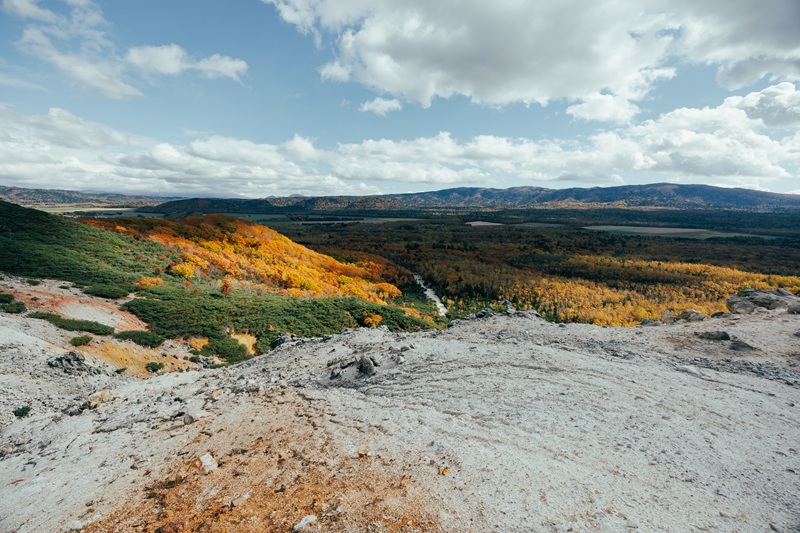
A breathtaking panorama unfolds beneath vividly colored autumn foliage—accessible only on a guided tour.
Interviewed by Jiji Press Ltd
- HOME
- NEWS & TOPICS
- Developing Advanced Tours at Atosa-nupuri, a “Local Treasure” – Teshikaga-Style Ecotourism Promotes Two Kinds of “Eco”