


April 03, 2026
NEWS & TOPICS
Adventure Experiences in Food and Nature – What Highland Resort in Rusutsu Can Teach Us
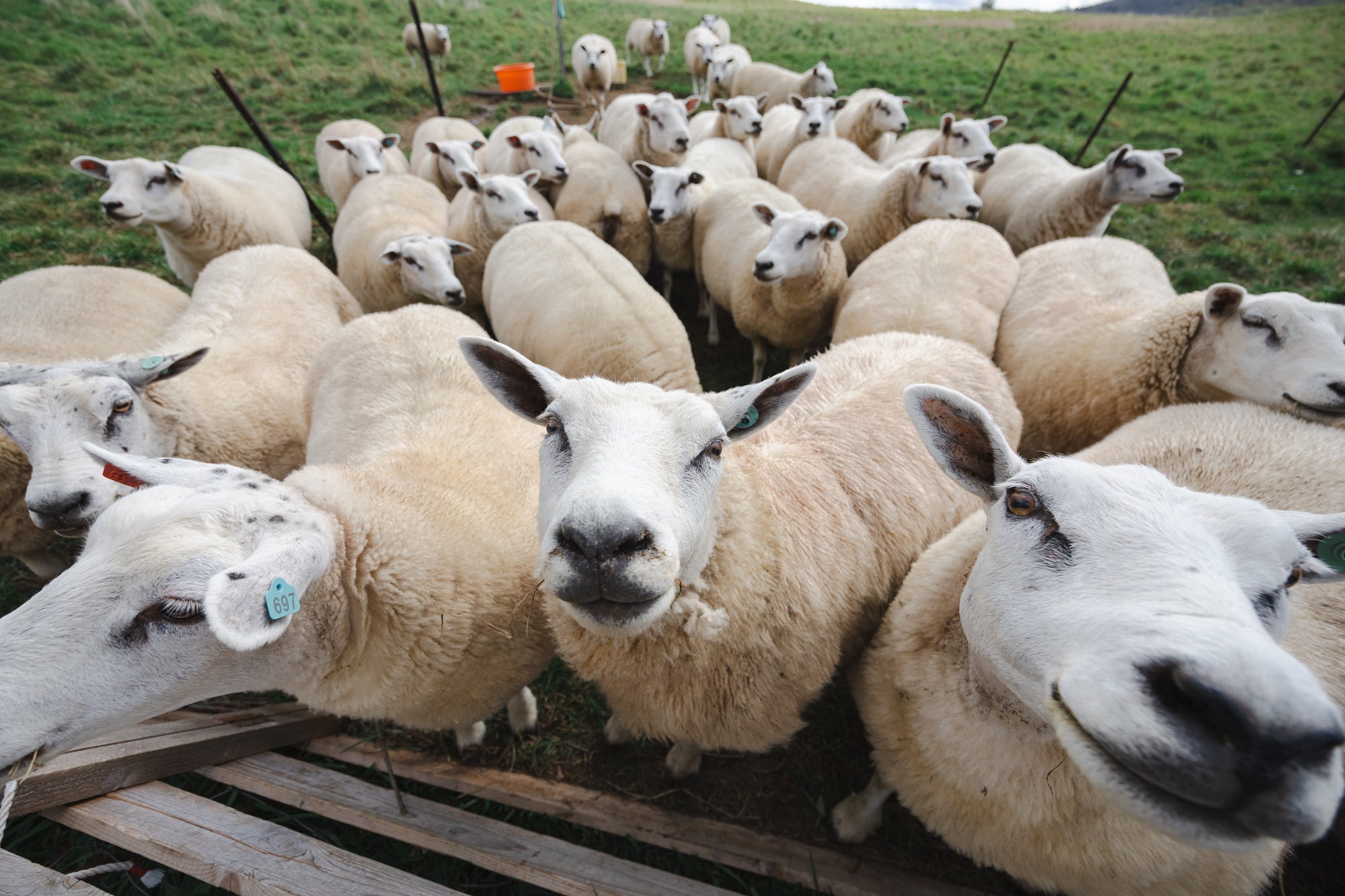
Sheep roaming freely across the pastures of Rusutsu Farm
Nestled at the foot of Mount Yotei—often called Ezo Fuji for its graceful, Mount Fuji―like silhouette—Rusutsu is a beautiful highland village surrounded by pristine nature. At its heart lies Rusutsu Resort, a year-round destination offering ski slopes in winter, golf courses in the green season and even its own amusement park.
From a sustainably managed farm that respects both animals and the environment, to food initiatives embracing dietary diversity, to scenic cycling routes leading to the shimmering shores of Lake Toya, visitors can embark on a wellness journey that invites them to learn directly from the region’s food culture and natural landscape.
Animal- and Environment-Friendly Farm Management
A refreshing breeze blows across the pastures of Rusutsu as sheep graze lazily on lush green grass.
Sheep meat is a cornerstone of Hokkaido’s food culture, yet homegrown lamb, hogget and mutton account for less than one percent of all sheep meat consumed in Japan. Rusutsu Farm, operated directly by Rusutsu Resort, began sheep farming in 2011 with just 26 animals, driven by a strong commitment to provide safe, trustworthy meat. Located at the foot of Mount Yotei—an area blessed with abundant pure water, fertile soil and rich natural surroundings—the farm now promotes its own local brand, “Yotei Hitsuji” (“Yotei Sheep”), in support of the region’s food culture and identity.
Today, around 520 sheep of two breeds, Texel and Suffolk, live on the farm. Texel sheep, with their white faces, are a rare, high-quality breed valued for their lean meat and clean flavor with almost no gamey odor. Suffolk sheep, easily recognized by their black faces, offer the classic rich taste many people associate with sheep meat. The Suffolk breed is also said to have inspired the look of the sheep in the British animation series “Shaun the Sheep.”
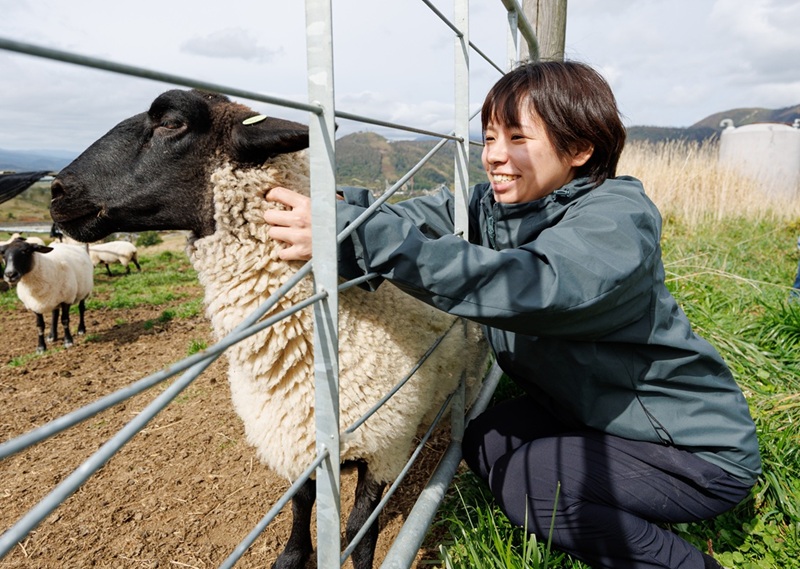
Rin Yonekura of Rusutsu Farm gently tends to a Suffolk ewe.
Among the five staff members on the breeding team, three are women who play key roles in day-to-day operations. “I think women’s uniquely maternal qualities are really put to good use here,” says team leader Rin Yonekura. From January to April each year, around 200 lambs are born. Because sheep have relatively narrow birth canals, deliveries can be difficult. In such cases, the women use their smaller, more slender hands to carefully assist, reaching in and gently pulling the lambs out. The team practices grazing management with animal welfare at its core, aiming to create a low-stress environment. The workers provide shade for the sheep, which are sensitive to heat, and regularly cut back excess grass, aware that the animals prefer short, tender blades.
The sheep are shipped as lamb from around 8 months of age, and as mutton when they reach 6 to 7 years old. Reflecting on the raising of animals that will eventually become food, Yonekura says, “I raise them while thinking, ‘Please grow into something delicious.'” She admits, however, “When it actually comes time to ship them, I just can’t bring myself to do it. I leave that last step to my male colleagues.” Because she cares so deeply for the animals she raises, Yonekura places great importance on “sending them only to trusted buyers and listening carefully to their feedback.” In recent years, she says, retailers have been telling her that “the flavor improves every year.”
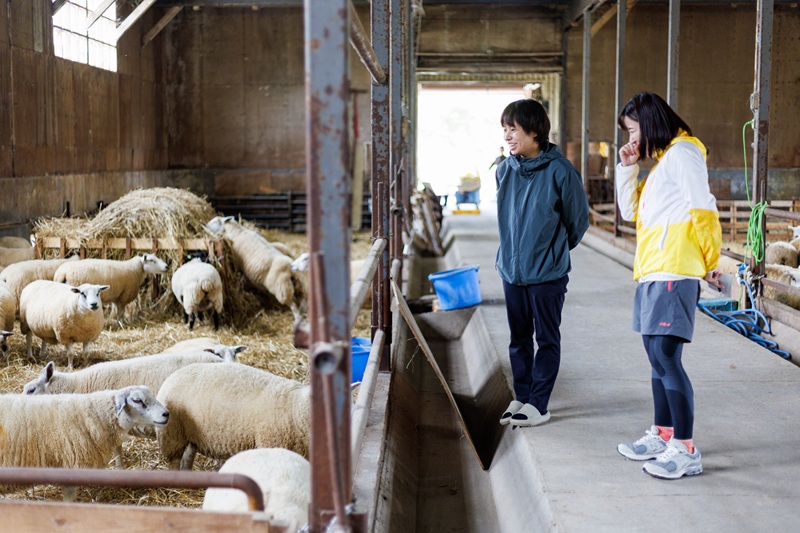
Yonekura explains the farm’s animal welfare initiatives inside the sheep shed.
From spring through autumn, the sheep graze freely on pasture. In winter, when the land is buried under snow, they stay in the shed. During seasons when fresh grass is not available, the farm sometimes supplements their feed with vegetables that would otherwise be discarded. One example is a joint project with Tomatoh Farm and Hokkaido Coca-Cola Bottling Co., in which Rusutsu Farm uses leaves and runners (stems) left over from strawberry production. This collaboration not only reduces food waste, but is also expected to lower carbon dioxide emissions and waste disposal costs—while helping to further improve the quality of the meat.
Every May, some of the wool shorn from the flock is marketed as “Rusutsu Wool.” In addition to creating original products such as blankets and key rings, the farm sells raw wool to specialized businesses as part of its effort to build a sustainable business model.
The sheep, raised with great care, are strikingly calm, and spending time with them reveals that each one has a distinct personality. Although Rusutsu Farm’s pastures are not open to the general public, visitors can meet the sheep for a limited time at “Hitsuji Hiroba” (“Sheep Plaza”) inside Rusutsu Resort. Summer weekend events—such as hands-on interaction programs and sheepdog demonstrations—are popular and play an important role in local tourism and regional revitalization.
The Cycle of Life and Dietary Diversity
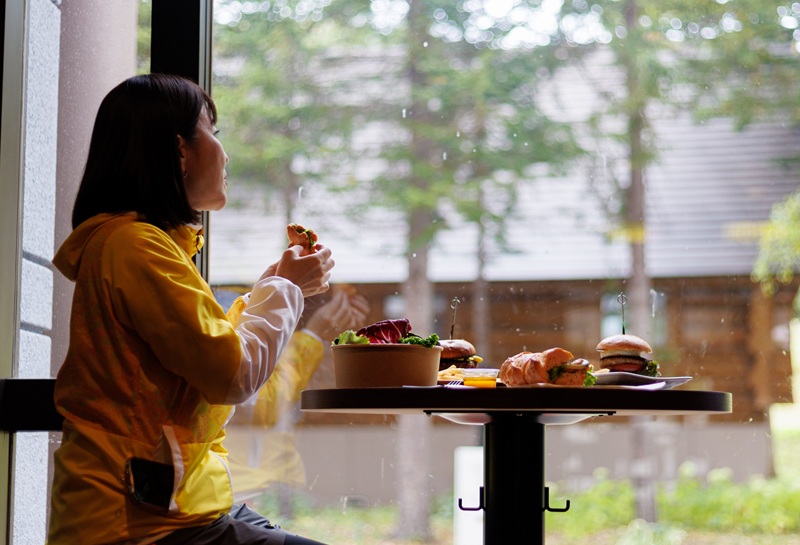
At Pub Cricket, guests enjoy authentic local cuisine in a relaxed, casual setting.
You might feel a bit torn about tucking into sheep meat right after seeing a flock of endearing sheep. Yet the meat from animals raised with such care by Yonekura and her team truly deserves to be savored. Pub Cricket, a restaurant inside Rusutsu Resort Hotel & Convention, serves a generous hamburger made entirely from Rusutsu Farm sheep meat—lamb, hogget and mutton.
The first bite is a pleasant surprise: there is almost none of the strong, gamey aroma many people associate with sheep meat. The fat is sweet and juicy, with a refined, elegant flavor. Alpine leek from Hokkaido is kneaded into the patty, adding a gentle sharpness that pairs beautifully with the sweet and salty teriyaki sauce. Even the bun reflects attention to detail—it is baked fresh in the hotel’s own bakery.
Eating here brings a reassuring sense of connection: you know exactly who raised the animals and where your food comes from. At the same time, the meal is a reminder of the responsibility that comes with receiving “life” as food. This is true not only for meat, but also for fish and vegetables. Travel offers a valuable chance to reflect on this cycle of life—feeling gratitude for the lives that sustain us, savoring every bite without waste, and being mindful of the environment that nurtures them all.
In recent years, demand for diverse food options in Japan has grown rapidly, driven in part by the increasing number of international visitors. At this restaurant, one standout item is a vegan burger made with soy-based “meat.” The patty has a rich, savory flavor and a tender, meat-like texture. Sweet onions sourced from Hokkaido add extra depth, making this burger a hit not only with vegans, but also with many other guests.
At Rusutsu Resort, this kind of consideration is especially important: during the winter season, international travelers make up about one-third of all visitors. To help vegans, vegetarians and guests with food allergies enjoy a longer, worry-free stay, the resort as a whole offers a broad range of dietary options.
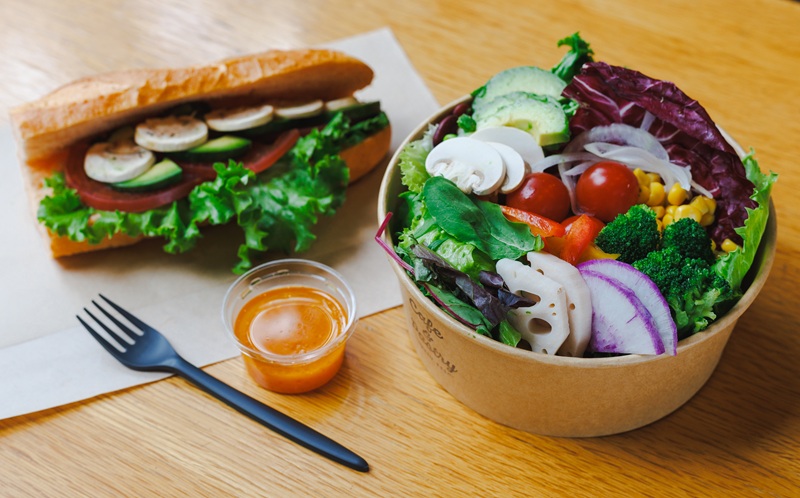
Staff-recommended salad and vegan-friendly sandwich at Daniel Street Salad & Deli
One such venue is Daniel Street Salad & Deli, where salads take center stage. Guests can build their own custom salad by choosing every element—from the base greens to the toppings and dressings. For those who prefer an easier option while still maintaining good nutritional balance, there are four different staff-recommended salads to choose from.
The sandwich selection also includes vegan-friendly choices. The baguette, baked in house at the hotel, is a French-style bread kneaded with tomato. Its crispy crust and soft, airy interior highlight the freshness of the fillings and give the sandwich a luxurious feel.
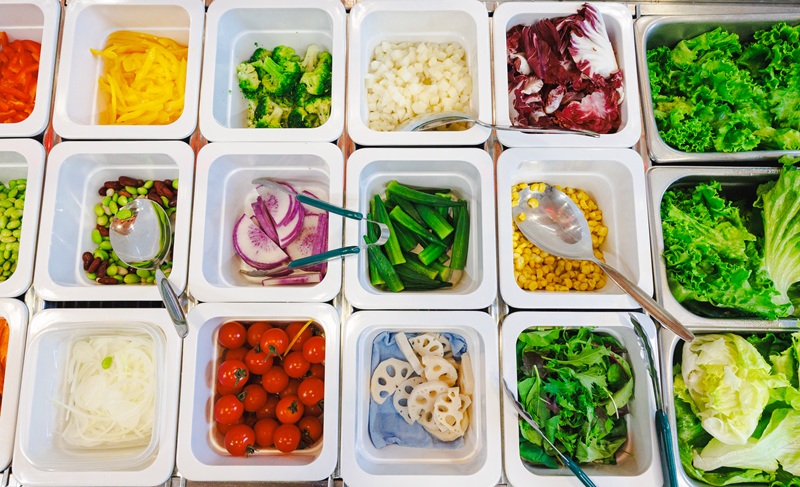
Fresh vegetables arranged with attention to both presentation and reducing food waste
To ensure a stable supply of seasonal, fresh vegetables, the restaurant places orders frequently and manages them with great care. While checking the condition of each ingredient, staff work closely with other restaurants in the resort—sharing and supplementing stock where needed—to help minimize food waste.
The restaurant is also committed to supporting local producers. Wherever possible, it uses ingredients from the surrounding Rusutsu area, such as locally made tofu, and asparagus and aronia berries grown at Rusutsu Farm. Here, guests can enjoy the true flavor and warmth of Hokkaido’s local cuisine, with options thoughtfully prepared for a wide range of dietary preferences and restrictions.
Scenic Cycling Route to Lake Toya
After enjoying the local cuisine, visitors may find that a cycling trip is a perfect way to immerse themselves in Hokkaido’s great outdoors. If you are confident in your fitness, try the Dynamic Course—a roughly 25-kilometer mountain bike ride from Rusutsu to the picturesque shores of Lake Toya.
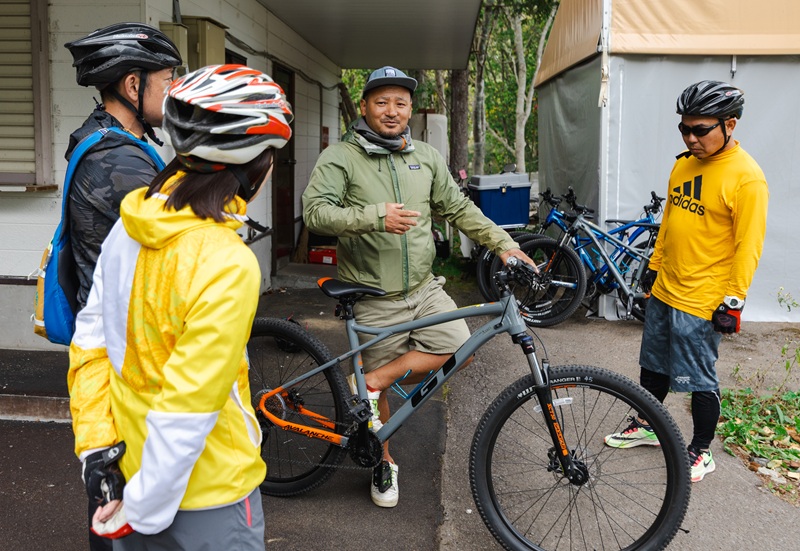
Tour guide Bhum (center) offers tips and guidance before departure.
Bhum is a friendly, experienced guide with 16 years in the field. Originally from Nepal and fluent in both Japanese and English, he is a reassuring presence for international visitors. Before setting off, Bhum carefully explains how to use the gears and brakes and leads a light warm-up. Even travelers who are not used to riding mountain bikes can relax and enjoy the ride with his support.
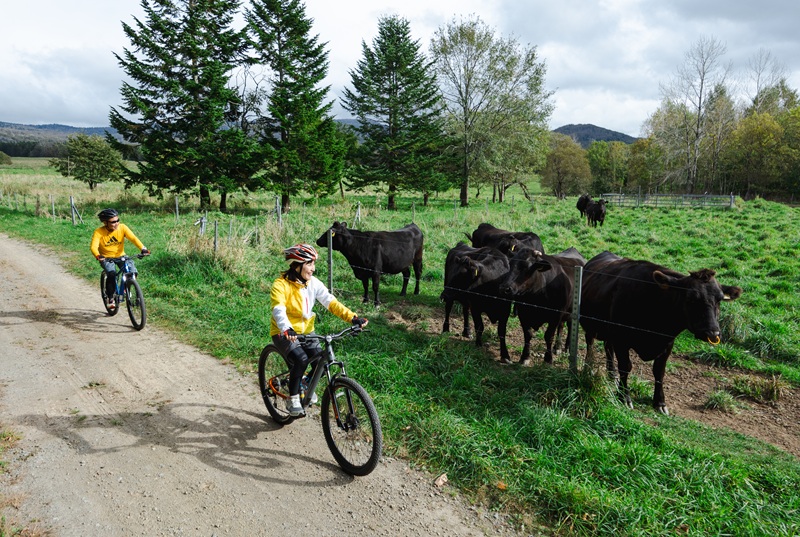
At the trailhead, curious cows come to see you off.
The ride begins on a forested plateau that is home to a working farm. As soon as you arrive, friendly cows wander over, clearly intrigued by their new visitors. The first half of the course takes you cruising through forest and open fields, with a pleasant rhythm of gentle climbs and rolling descents. The rush of dropping down dirt tracks is a pure kind of thrill that only mountain biking offers. As you slice through the wind with your whole body, you can feel the energy of the landscape right down to your fingertips.
Birdsong echoes through a bright forest of white birch, while dwarf bamboo and silver grass sway like waves in the breeze. The leaves are just beginning to turn, brushing the green hillsides with reds, golds and amber. The guide, Bhum, suddenly points at the trail and says with a grin, “Fox droppings.” Deer, foxes, raccoon dogs and other wild animals all live in these woods, he explains—reminding the riders that they are passing through a living, breathing ecosystem.
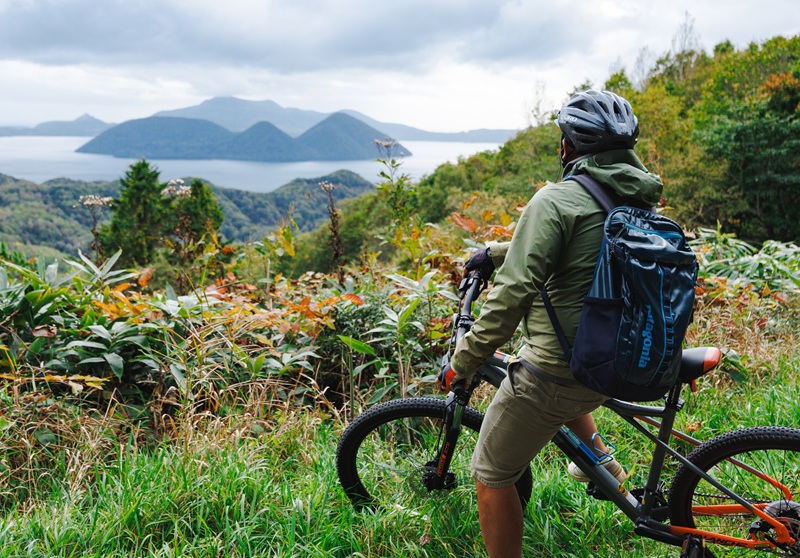
Midway along the trail, riders are treated to a sweeping view of Lake Toya. The highest peak on the far shore is Mount Usu.
Just as a pleasant heaviness settles into tired legs, the trees open up—and there it is. Framed by the hills, Lake Toya appears like a painted scene: a vast caldera lake created by a massive eruption about 110,000 years ago.
The area is now protected as the Toya-Usu UNESCO Global Geopark. From a lookout, the guide shares stories of this restless landscape: Mount Usu, still an active volcano; Mount Showa Shinzan, a lava dome that dramatically pushed its way up from farmland between 1944 and 1945 and, remarkably, remains privately owned to this day. Even under a blanket of cloud, the layered ridgelines of the surrounding mountains stand out. The view feels like a gift reserved for those who make the climb—a wide panorama that washes away fatigue and leaves both body and mind renewed.
In the second half of the route, cyclists ride along a flat, paved road with sweeping views of Lake Toya’s shoreline. In spring, if the timing is right, you may find yourself pedaling through a magical “tunnel” of cherry blossoms, their branches arching over the pavement in full bloom, the guide explains.
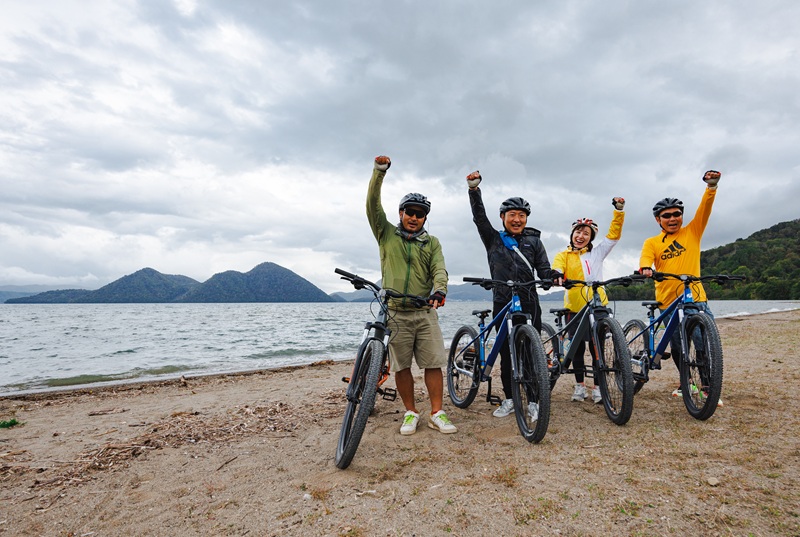
The lakeside at the Lake Toya finish line. Cycling tours are also a great way to help prevent overtourism by encouraging visitors to go beyond crowded hot spots.
Soon, the sandy beach of Lake Toya comes into view—this is also part of the course used for the Hokkaido Triathlon. The gentle sound of the waves quietly greets you as you cross the finish line. Traveling under your own steam lets you appreciate the local culture and nature with all your senses, turning each moment into a richer, more memorable experience.
Although Rusutsu Resort is surrounded by vast, untouched scenery, it is surprisingly easy to reach. A direct shuttle bus from New Chitose Airport takes about 90 minutes. There is no need to haul heavy luggage through train transfers or navigate unfamiliar roads in a rental car. Simply relax and enjoy the changing landscapes from your bus window—at the end of the ride, unique experiences in the village of Rusutsu are waiting for you.
RUSUTSU Resort official site
Interviewed by Jiji Press Ltd
- HOME
- NEWS & TOPICS
- Adventure Experiences in Food and Nature – What Highland Resort in Rusutsu Can Teach Us