


April 21, 2026
Local Initiatives
Shimada and Lee, Sentinels of a Timeless Lake
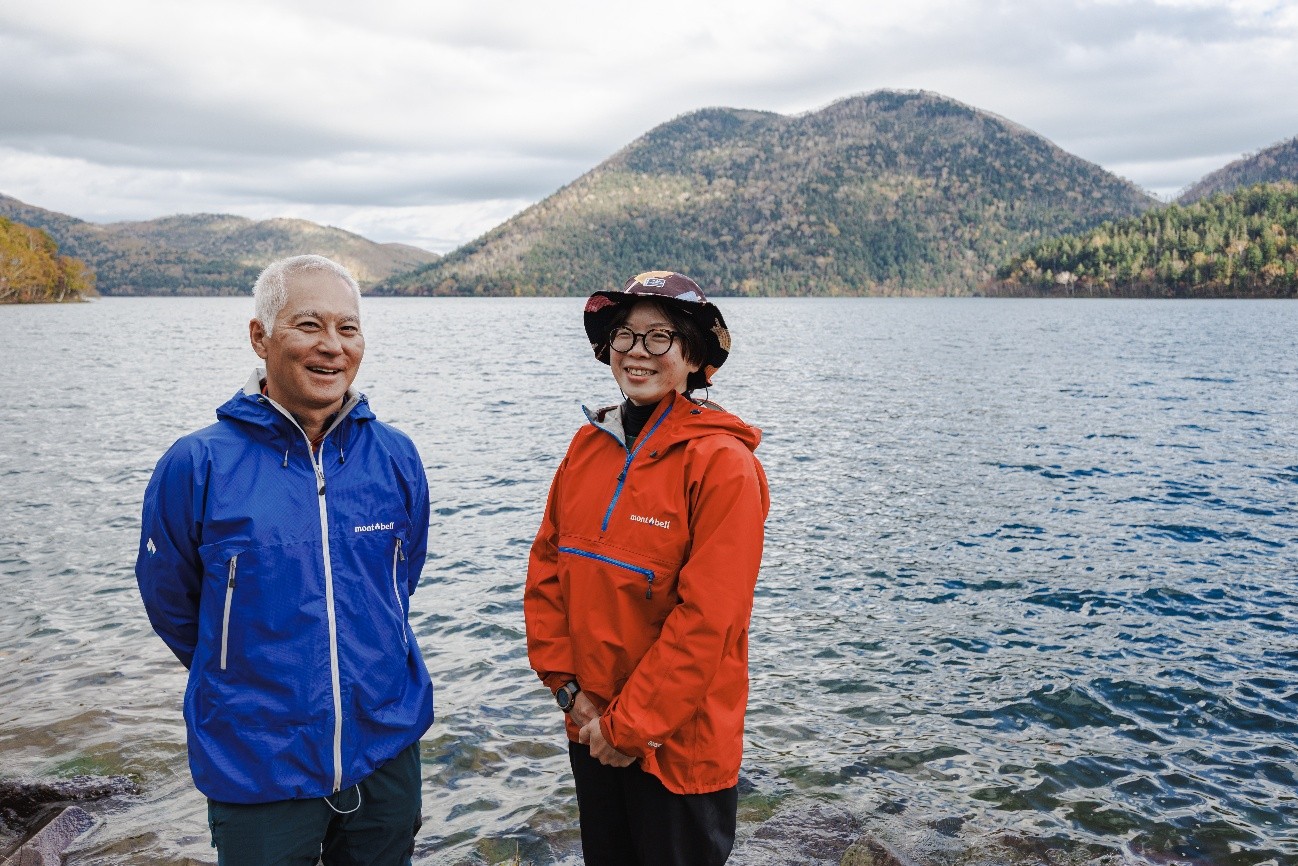
Located within Daisetsuzan National Park, Lake Shikaribetsu stretches like a mirror amid the hills. Mouth-shaped, the mountain seems ready to whisper its secrets to you. Here, nothing is fixed. The landscape changes without warning, light slips by, animals appear then disappear.
This is where Mr. Shimada and Ms. Lee work, two guides passionate about the region and eager to share their knowledge with visitors. They welcome people all year round to discover the area.
The lake’s guardians
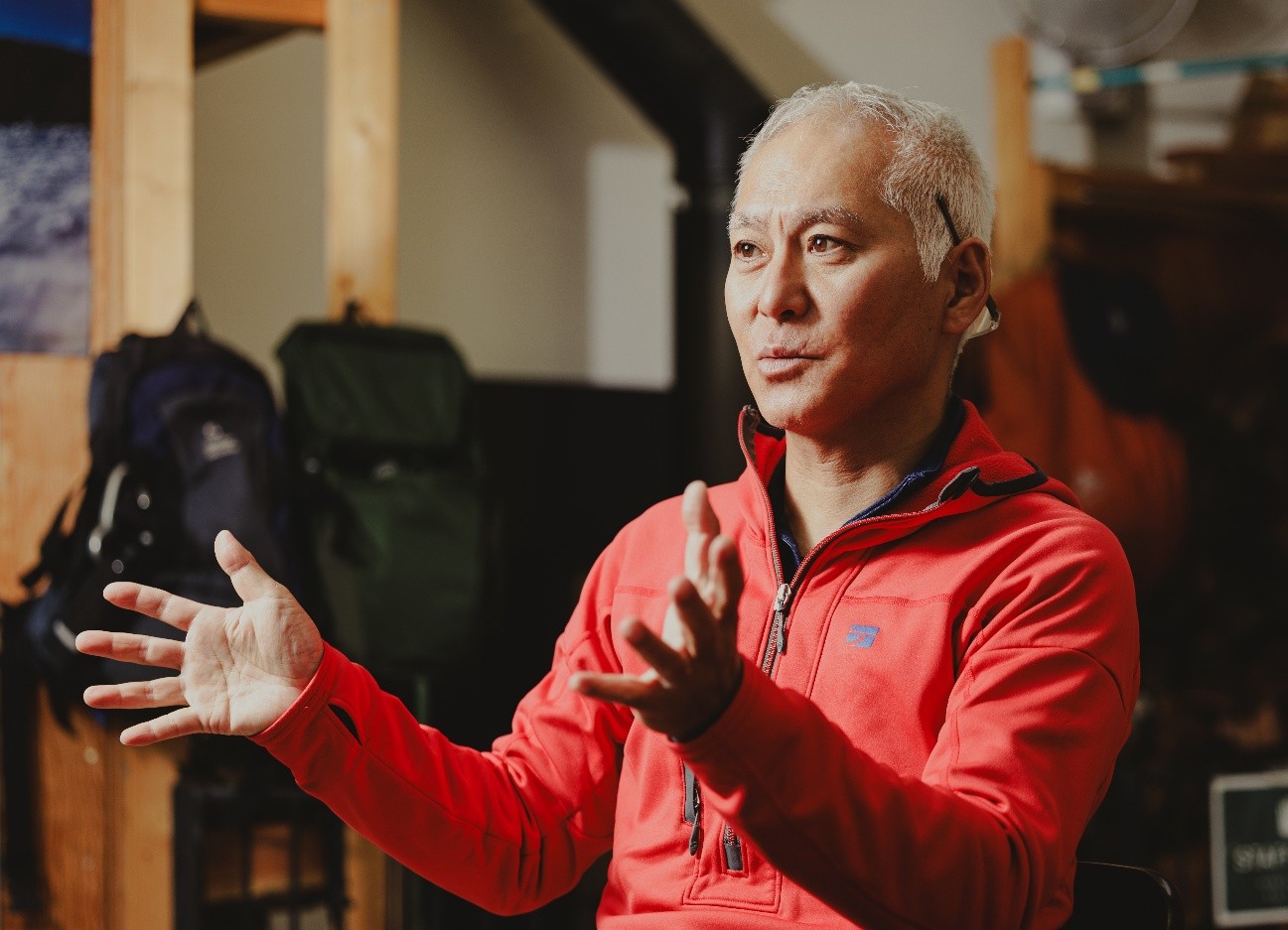
Mr. Shimada has been a guide for twenty years. A former office worker in Sapporo, he traded the comfort of this life for the paths along the lake without regret. “I have always played outside since childhood,” he says simply. The mountaineering club in high school, then chance: a mentor invited him to come to Shikaribetsu. He accepted, and never went back. “To be honest, if I got bored, I could have gone elsewhere, but I still haven’t gotten bored. I suppose this place suits me.” Today, his eyes still light up when he talks about new discoveries and unexpected events.
 Ms. Lee hails from Taiwan and her path to becoming a guide was far from predictable. She made her way to Hokkaido ten years ago as a volunteer for the annual winter village (kotan) of Shikaribetsu, which is constructed on the frozen lake each year. But it was only three short months. However, she was soon persuaded to come back as a volunteer, exchanging board and lodging for her services, and did multiple back and forth. After having been asked, “Don’t you want to come back and work here?” she finally settled down in Hokkaido. First, as a translator, then as a complete guide. “Here, after the Japanese, we have quite a few Taiwanese clients. I speak to them directly in Chinese. In English too.”
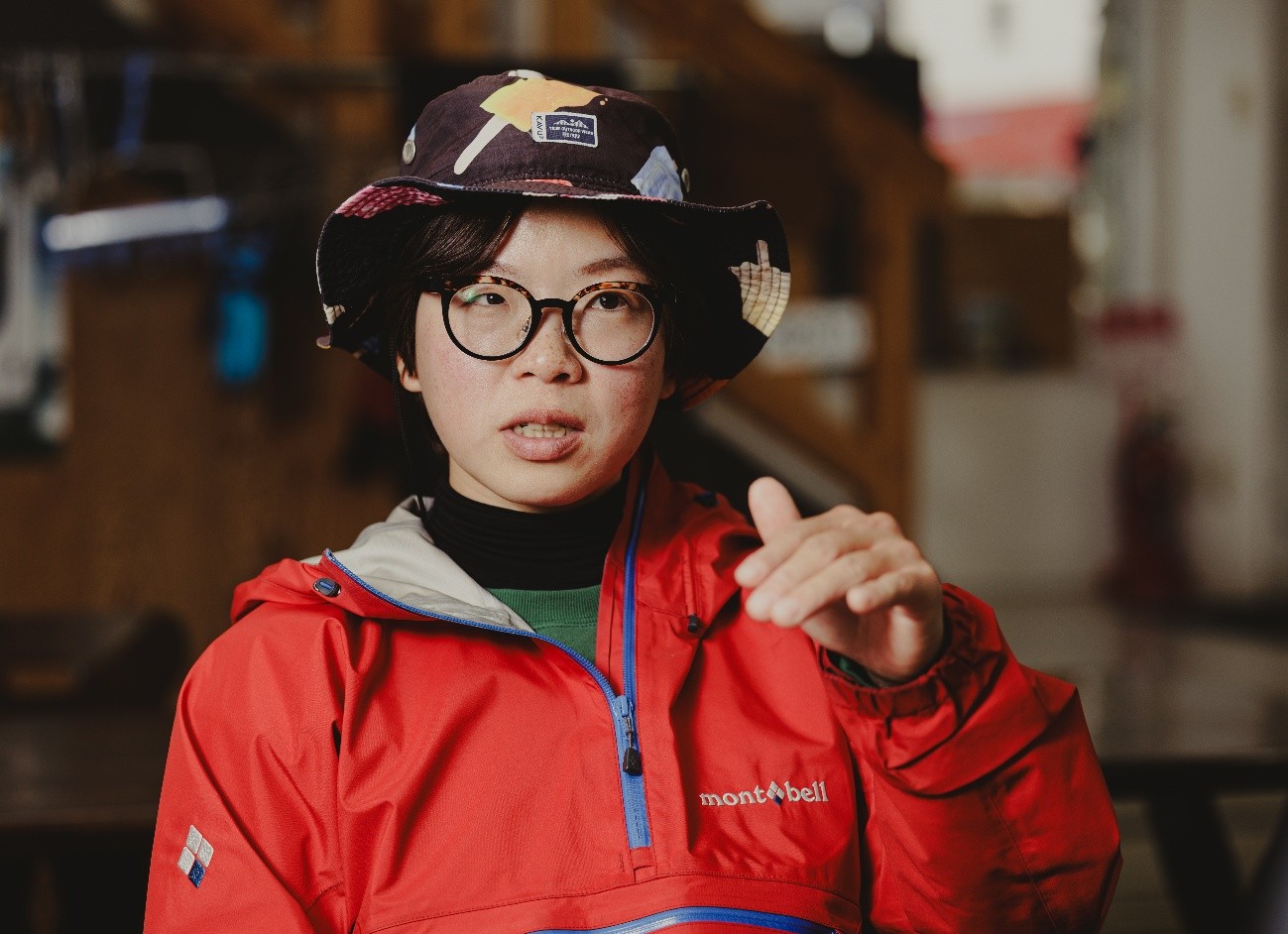 Currently, she is one of the few foreigners to hold a Hokkaido-certified outdoor guide qualification, with expertise in nature and canoeing. She obtained these qualifications after passing both written and practical exams in Japanese.
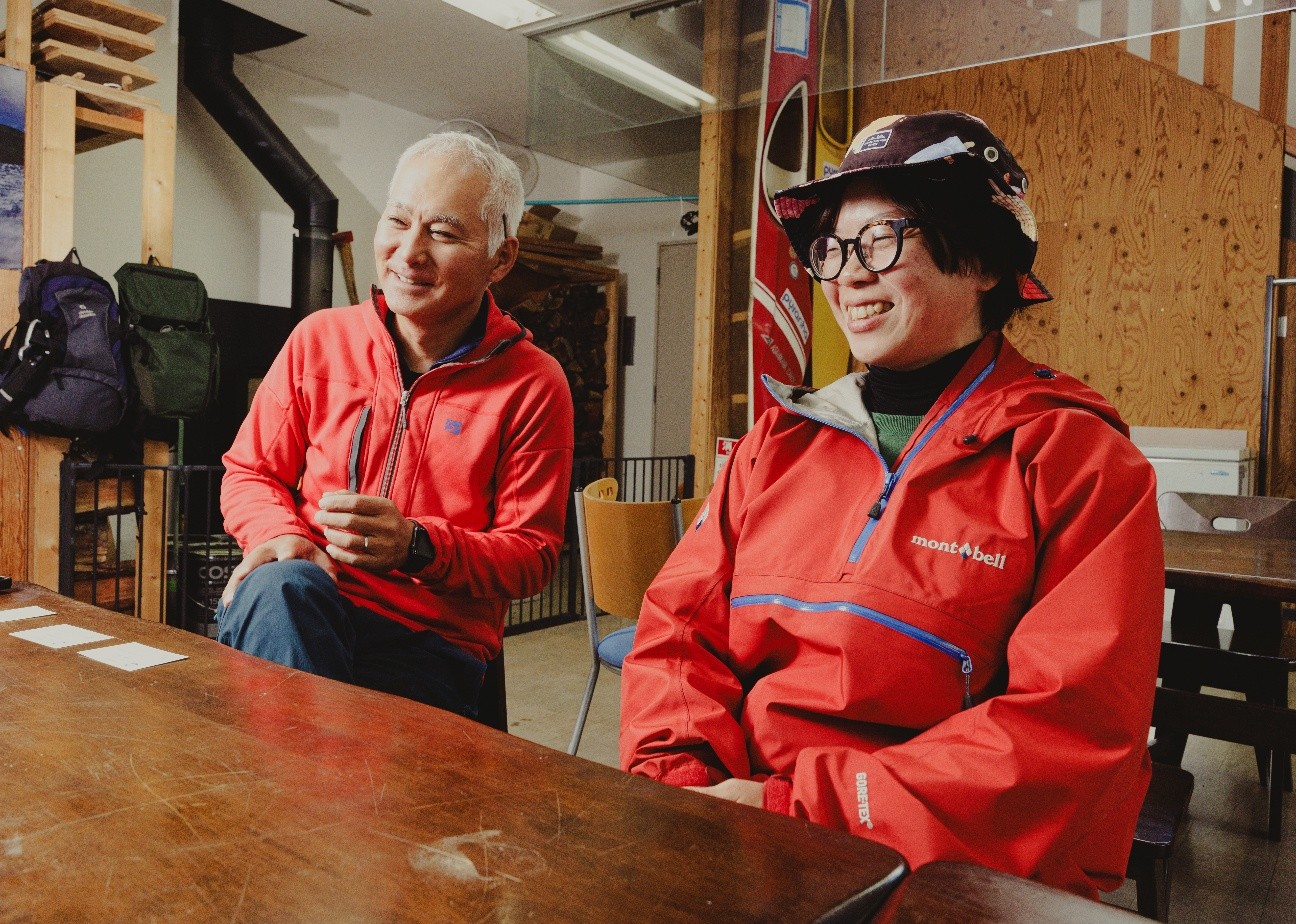
The dynamic duo sometimes works alone, sometimes as a team. They know perfectly how to harness their strengths to captivate visitors with the wonders of Shikaribetsu.
A continuous dialogue with both visitors and nature
In Shikaribetsu, the guides are not extremely specialized: everyone knows how to do everything, or almost. They canoe, take forest walks, go on moss-area excursions, manage equipment, and maintain sites. A team of around ten people, rotating shifts, and clients who sometimes arrive unannounced. Flexibility is not an extra; it’s a prerequisite for the site’s endurance. Leading tours in the morning, another in the afternoon, then maintaining, cleaning, and inspecting. The work continues even after visitors depart.
Walking with Lee or Shimada means learning to see things differently. This plant that a deer has nibbled on indicates its presence. Is the bird’s cry a warning or a mating call? A northern pika, a living remnant of the ice age, sometimes appears under a rock at ground level. Who better than these two guides to help you get closer to them?
Nothing is guaranteed. But this is exactly what the guides defend: the experience is not a calibrated product.
Today, they welcome travelers from all over the world—Australia, France, and Singapore—to explore mossy forests or to take a canoe out onto the lake at sunrise.
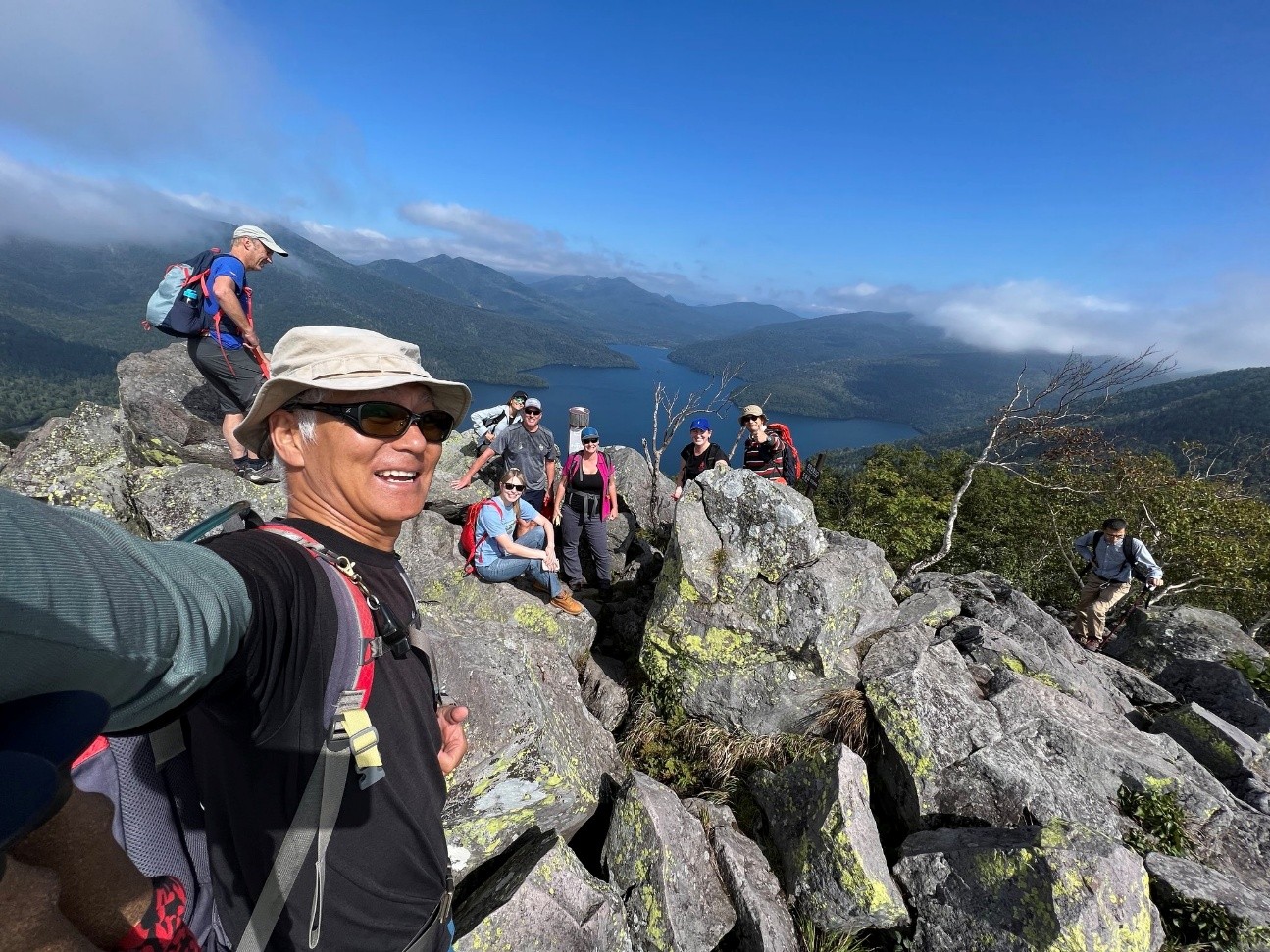 Mr. Shimada at the mountain (Courtesy of Lake Shikaribetsu Nature Center)
Expectations differ. Westerners often already know how to canoe; they seek a landscape, a context, and another way of being on the water. For many Asians, though, this is their first canoeing experience. They come as a family, sharing time with nature. The guide must adapt: sometimes explaining technical gestures, but at other times shifting their attention to the ecosystem, wildlife, and the place’s stories. For example, did you know that, in the past, people threw sharp objects into the lake to invoke rain?
What strikes one about Shimada and Lee is their way of doubting. They ask questions, verify and exchange information with other guides: terrain that has changed, a bear track, a potential danger. They also learn from clients. When an Australian traveler expresses surprise that a forest doesn’t burn, the remark opens a discussion about ecosystems and about what we take for granted, depending on where we come from. Shikaribetsu is a place for conversation rather than teaching.
The most cherished memory for visitors is paddling a canoe at dawn, when the lake is mirror-like, calm, and silent, with the mountains gradually emerging from the mist as the sun rises. A rare and unique moment each time. Like everything else here.
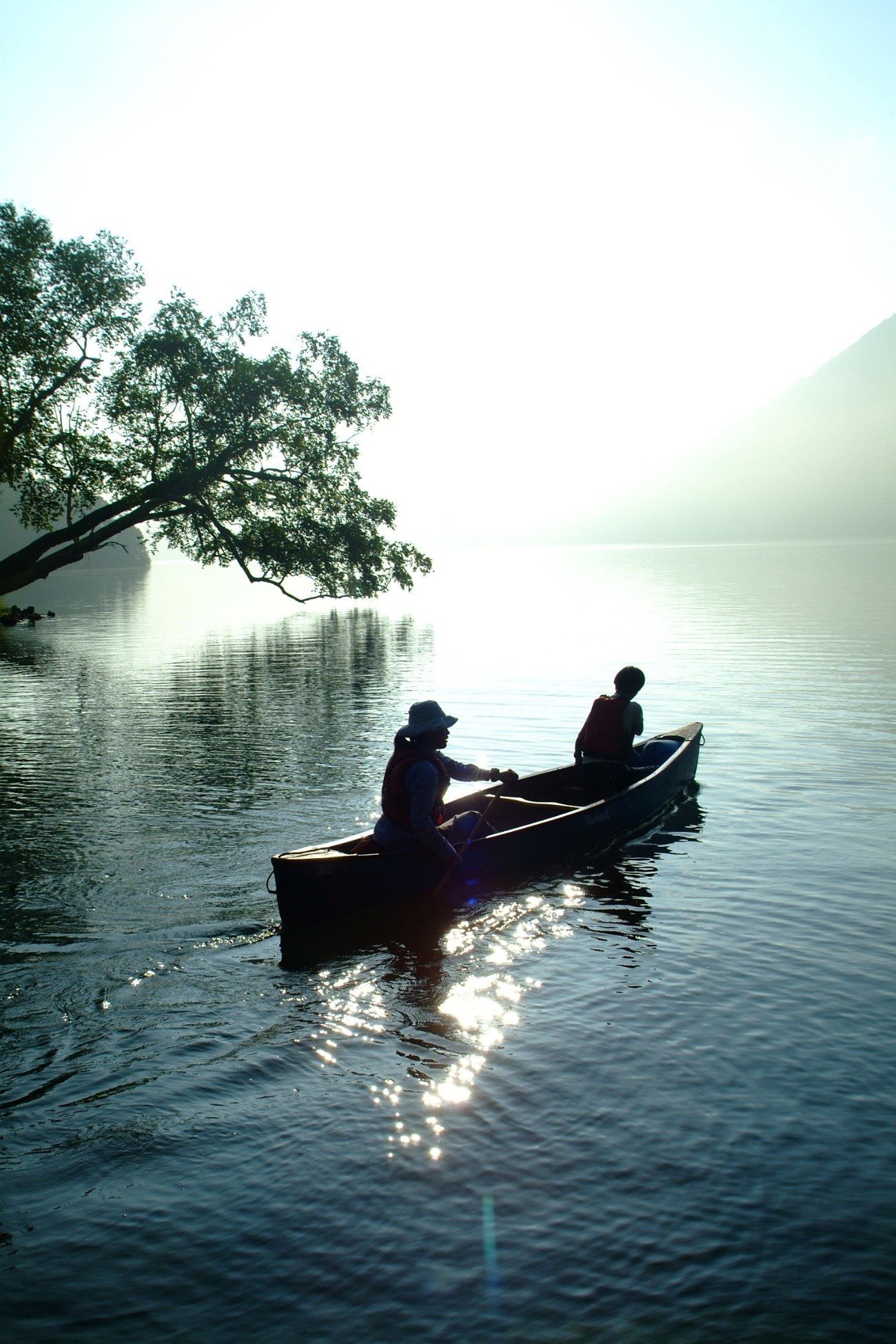 Paddling a canoe at sunrise (Courtesy of Lake Shikaribetsu Nature Center)
Shimada and Lee promise attentive presence and the ability to open visitors’ eyes to a world they could have passed through without seeing. Perhaps that’s what it means to be a guardian: not to close off a place from the world, but to offer the world a way to encounter it without damaging it.
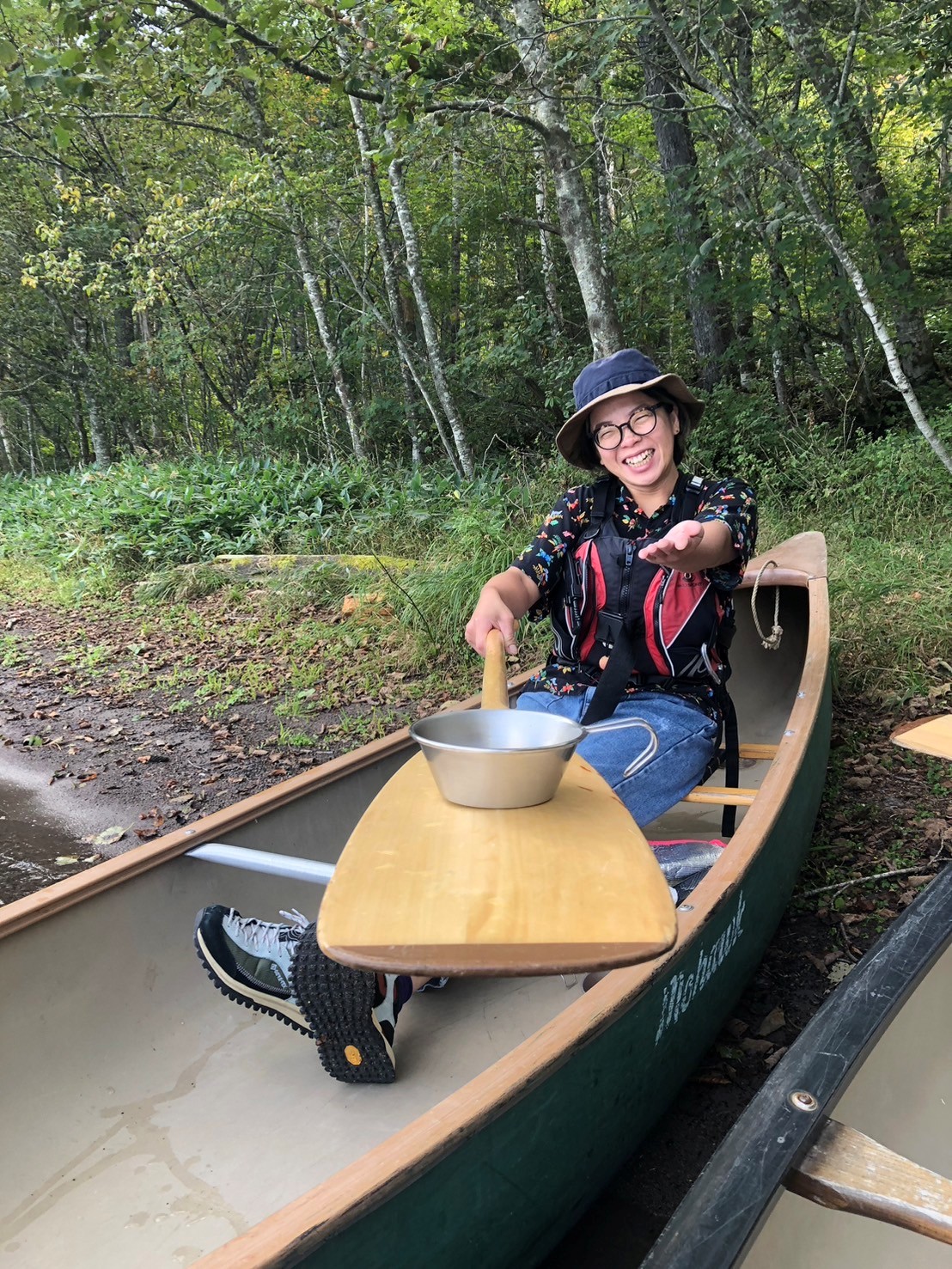 Ms. Lee with a canoe (Courtesy of Lake Shikaribetsu Nature Center)
Profile of Lake Shikaribetsu Nature Center
Nestled around Lake Shikaribetsu, at the southern fringes of Daisetsuzan National Park, the Lake Shikaribetsu Nature Center is a nature-immersive facility. Leveraging one of Japan’s clearest lakes and its surrounding primeval forest as its backdrop, the center offers a multitude of year-round activities, including canoeing, kayaking, guided nature walks, aerial adventures, the winter-only “Lake Shikaribetsu Kotan” ice village, and snowmobiling.
The center, staffed by Hokkaido government-certified outdoor guides, promotes adventure travel, prioritizing safety and environmental conservation, for domestic and international visitors.
Kazuaki Shimada
Hokkaido Adventure Travel Guide (Nature Guide/Canoe Guide); Hokkaido Outdoor Guide (Nature and Canoeing).
Born in 1974 in Sapporo, Hokkaido, where he was also raised. During high school, he was a member of the mountaineering club. After graduating from the Hokkaido Institute of Technology (now Hokkaido University of Science), he worked as a civil engineering technician for a private company. In 2006, he joined the Lake Shikaribetsu Nature Center (Hokkaido Nature Center Co., Ltd.). He earned his Hokkaido Outdoor Guide certification in 2018 and has been working as a guide in the field for over two decades.
YuChen Lee
Hokkaido Adventure Travel Guide (Nature Guide); Hokkaido Outdoor Guide (Nature & Canoeing).
Born and raised in Kaohsiung City, Taiwan. She graduated from Chinese Culture University in Taipei, Taiwan. While traveling around the world, she participated as a volunteer in the “Lake Shikaribetsu Kotan” winter village in 2017 and became deeply captivated by the natural environment of Lake Shikaribetsu. In 2018, she joined the Lake Shikaribetsu Nature Center (Hokkaido Nature Center Co., Ltd.). She obtained the Hokkaido Outdoor Guide certification (Nature) in 2023 and the same certification (canoeing) in 2025. Fluent in three languages, she is known as “ELMO” to visitors from Taiwan, Japan, and other countries, and serves as a guide for domestic and international tourists.
- Home
- NEWS & TOPICS
- Shimada and Lee, Sentinels of a Timeless Lake